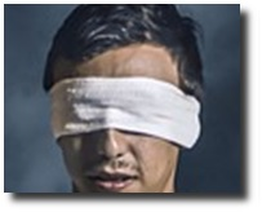

“You’re just biased… that’s why you believe what you do!” What comes to mind when you hear a claim like this? It probably isn’t anything positive. The initial response from many Christians is to become defensive and possibly more emotional. But what do you think about this? How should we respond?
Merriam-Webster defines “biased” as, “exhibiting or characterized by bias”. Don’t you love it when definitions aren’t very helpful? Actually, it’s not their fault. This definition is accurate, but what we really need to look at is the definition of “bias”. Having multiple meanings, the one they offer that is more apropos to our discussion is as follows: “a personal and sometimes unreasoned judgment”.
Restating the skeptics claim (using the definition we reviewed), it would sound like this, “You’re just expressing your personal, illogical beliefs, so there’s no reason anyone else should pay any attention. You really shouldn’t be pushing it on others!”
So is that what we are doing as Christians? Actually, in some cases, yes! Why would I say that? It’s because if we don’t have a solid, logical, reasonable case for what we believe, it truly is more of a “blind faith”, in which case, there’s no compelling reason for anyone else to take it seriously or for us to have any significant platform from which to broadcast our views. On the other hand, when we do have a well thought-out defense of our faith, it’s a completely different situation.
So our we biased? If you say no… you’d better check your pulse! If you are alive (and I am assuming you are because you’re reading this), then you have a bias! How so? It’s actually impossible not to have some type of bias. Why is that? It all relates back to what we have been discussing so often over the past number of months and also to the reason for our ministry name change. It’s all about “starting points”. This is what we also call our presuppositions, our beginning beliefs, and yes, our biases. These all consist of things that you assume to be true, even though you technically can’t prove them. We’ve discussed this before, but some examples would be (a) your own physical existence, (b) the existence of logic, and (c) the assumption that we are accurately perceiving the physical world around us and can process the information correctly. These beliefs can all be supported by very strong evidence, so much so, that it is very reasonable to assume these things are true, even though they can’t actually be proven. They are all part of our worldview or our “starting point”… or our bias.
The question here isn’t whether or not someone is biased, because it’s impossible to approach something without some preconceived notions. Here’s the real question… “Is your bias a reasonable one?”
Here’s just one quick example as it relates to an actual conversation. Regarding some opinion you offer about whatever subject you are discussing, someone might say, “You can’t bring your bias about the Bible into this!” Why would they say that? Because they don’t view the Bible as the inspired Word of God. But wait a minute… that’s actually expressing a bias! So in essence, they are telling you they are allowed to express their bias, but you can’t use yours in any way! Looking at this very simply, you are biased that the Bible is the inspired Word of God and they are biased it isn’t! Pretty simple. The best approach is for both parties to fully acknowledge their biases and then proceed from there in making their case.
They will think they are actually neutral when it comes to their beliefs, but you, on the other hand, are biased. This is patently false! No one is truly neutral. They might want to believe they are neutral when it comes to the Bible, stating they neither believe it is the Word of God nor that it isn’t. In reality, the Bible itself claims it is the Word of God, and they are admitting they don’t necessarily accept that premise, which is a form of bias, especially when they insist you leave the Bible out of it. If they were truly neutral, they wouldn’t have a problem with you invoking Scripture in sharing your views.
There’s also a big difference between being biased based on sheer personal preferences (and in such a way as to deter you from thinking clearly) versus being biased based on solid, logical reasoning. We can perhaps develop that further in a future article.
So yes, we are all biased in one way or another. As Christians, we should “always be ready” (1 Peter 3:15) to share reasons as to why our bias is not only reasonable but is really the only one that consistently makes sense of the world in which we live.
In the meantime, if you have any questions about this or any other issue, please don’t hesitate to contact us!